Double Cleansing: Why and How
The Korean skincare technique that changed how we wash our faces. what it is, why it works, and how to do it without overcomplicating things.
 The Rooted Glow Team
 The first time someone told us to wash our face with oil, it sounded backwards. Put oil on oily skin? To make it… less oily? The logic didn’t track.
Then we tried it. Three weeks later, our skin was clearer, softer, and less reactive than it had been in years. That was our introduction to double cleansing; arguably the most impactful single change you can make to a skincare routine.
What Is Double Cleansing?
Double cleansing is exactly what it sounds like: washing your face twice, using two different types of cleanser.
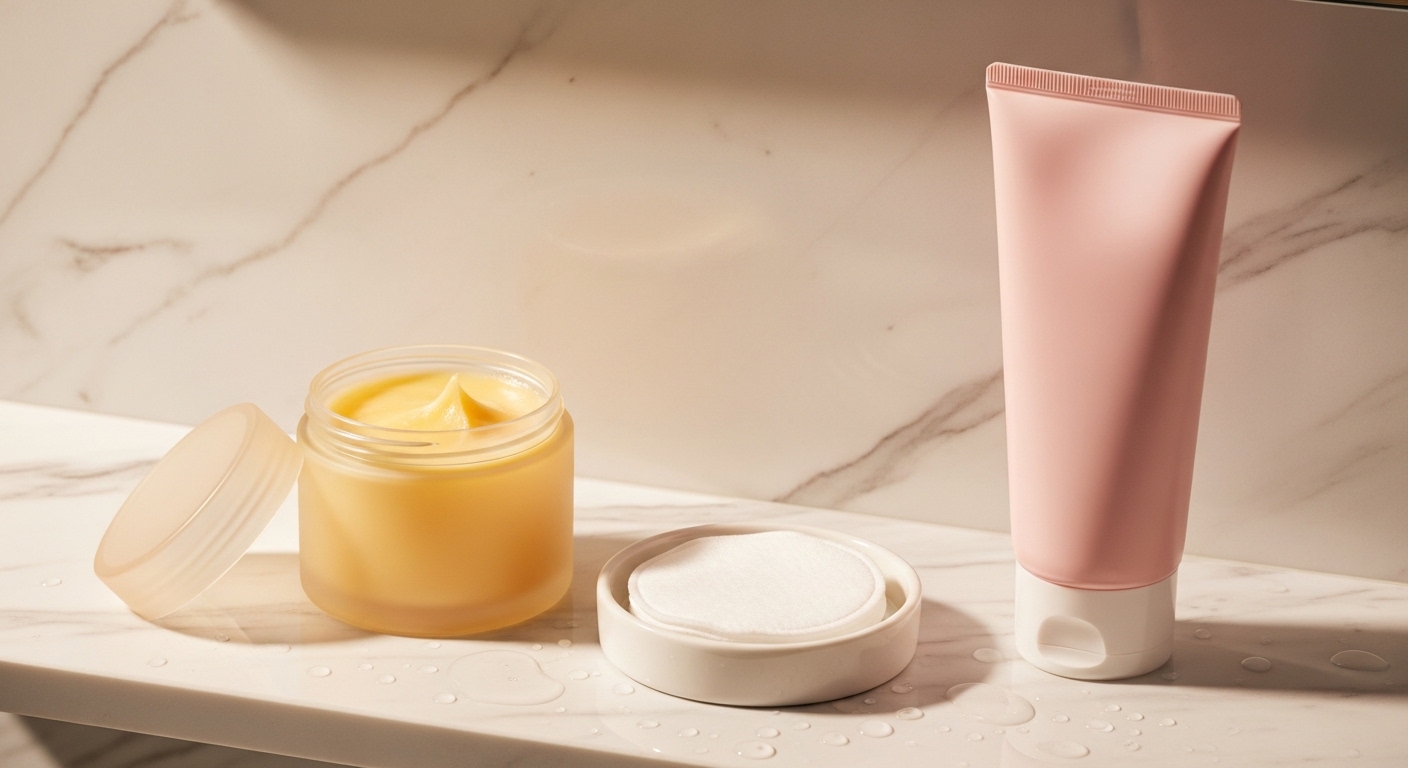
Step 1: Oil-based cleanser. dissolves makeup, sunscreen, sebum, and oil-based impurities.
Step 2: Water-based cleanser. removes sweat, dirt, and any remaining residue.
The concept comes from Korean skincare (though Japanese beauty has a similar tradition), and it’s rooted in basic chemistry: oil dissolves oil, water dissolves water-soluble grime. One cleanser can’t effectively do both jobs.
Why It Works
If you wear sunscreen daily (and you should), a single cleanser almost certainly isn’t removing it fully. Most sunscreens (especially the mineral and water-resistant formulas) are designed to cling to your skin. A gentle foam cleanser alone leaves a film behind.
That invisible sunscreen residue leads to:
- Clogged pores and breakouts
- Dull, congested-looking skin
- Reduced effectiveness of your evening skincare products (they can’t penetrate through the film)
The oil cleanse step breaks down that protective layer. The water cleanse step then works on an actually clean surface. It’s methodical, and it works.
Even if you don’t wear makeup or heavy sunscreen, your skin produces sebum throughout the day. Environmental pollutants stick to that sebum. An oil cleanse lifts all of that off without stripping your skin the way a harsh foaming cleanser would.
The Oil Cleanse Step
You have three main options for the first cleanse:
Cleansing Oils
Liquid oils that you massage into dry skin, then emulsify with water. They turn milky when water is added and rinse clean. These are the most popular option in Korean skincare.
Good for. All skin types, especially dry and normal skin.
Texture. Silky, thin, spreads easily. Pleasant to use as a facial massage medium.
One we keep reaching for is the Anua Heartleaf Pore Control Cleansing Oil. The heartleaf extract adds a soothing element to the cleansing step, and it emulsifies beautifully without leaving residue.
Cleansing Balms
Solid at room temperature, they melt into an oil when you warm them between your palms. Same function as a cleansing oil but in a different format.
Good for. All skin types. Some people prefer the balm format because it feels more substantial and less messy.
Texture. Starts as a sherbet-like solid, melts into a rich oil, emulsifies into a milky liquid.
Micellar Water
Technically an option for the first cleanse, but we’d only recommend it as a pre-cleanse for very light days (no makeup, no sunscreen). It’s not as effective as true oil cleansing at dissolving stubborn products.
How to Apply
- Start with dry hands and a dry face. This is important; water prevents the oil from gripping onto impurities.
- Apply the oil/balm to your face and massage gently for 60 seconds. Don’t rush this. You’ll feel grittiness dissolve as it breaks down sunscreen and sebum.
- Wet your hands slightly and continue massaging. The oil will emulsify; turn from clear/oily to milky.
- Rinse thoroughly with lukewarm water.
The 60-second massage isn’t just about cleansing; it improves circulation and helps with lymphatic drainage. You’ll notice your skin looks more alive after this step, even before the second cleanse.
The Water Cleanse Step
After the oil cleanse, your face is clean of oil-based impurities. Now you follow up with a water-based cleanser to handle everything else.
What to Look For
- Low pH (5.0–6.0). matches your skin’s natural acid mantle
- Gentle surfactants. avoid SLS (sodium lauryl sulfate), which is too stripping for most people
- No fragrance (ideally). fragrance is a common irritant, especially in products that stay on your skin even briefly
Types
- Foam cleansers. Pump dispenses foam directly. Convenient, but make sure it’s not overly stripping.
- Gel cleansers. Clear gel that lathers lightly when rubbed. Good for oily/combo skin.
- Cream cleansers. Milky, non-foaming. Best for dry or sensitive skin.
How to Apply
- Wet your face with lukewarm water
- Work the cleanser into a lather in your hands first (don’t apply it directly as a blob)
- Massage gently over your face for 30–60 seconds
- Rinse thoroughly
- Pat dry with a clean towel; don’t rub
When to Double Cleanse
Every evening. This is a PM-only practice. In the morning, your face doesn’t have makeup, sunscreen, or environmental buildup; a single gentle cleanser (or even just water) is enough.
The evening double cleanse is non-negotiable for us. It’s the foundation everything else builds on. Serums, essences, moisturizers; none of them work properly on skin that isn’t genuinely clean.
Common Mistakes
Rushing the oil cleanse. Thirty seconds isn’t enough. Give it a full 60 seconds of gentle massage. You’ll feel the difference.
Using water too early. Your face and hands need to be dry when you first apply the oil cleanser. Water creates a barrier that prevents the oil from bonding with impurities on your skin.
Choosing a stripping second cleanser. If your face feels tight and squeaky after the water cleanse, that cleanser is too harsh. “Squeaky clean” is a myth; it means your moisture barrier just got damaged.
Double cleansing in the morning. Overkill. Your skin replenishes its protective oils overnight. A gentle morning cleanse (or just water) preserves that.
Skipping the second cleanse. The oil step alone leaves an emulsified residue. The second cleanse removes that. Both steps matter.
Our Routine
Here’s exactly what the evening cleanse looks like for our team:
- Dry face, dry hands
- Massage cleansing balm for 60–90 seconds (we use this time to decompress; it’s oddly meditative)
- Wet hands, emulsify
- Rinse
- Low-pH gel cleanser, lathered in hands first
- Gentle 30-second massage
- Rinse with lukewarm water
- Pat dry
- Immediately move to toner/essence while skin is still slightly damp
Total time: about 3 minutes. For the single biggest improvement most people can make to their skincare, that’s a remarkably small investment.
For Skeptics
If you’re thinking “my face wash works fine”; it might. But try double cleansing for two weeks and see what happens. The most common reaction we hear: “I didn’t realize my face wasn’t actually clean before.”
Run your finger across your face after your regular cleanser. Now try double cleansing and do the same test. The difference in how clean your skin feels is unmistakable.
Start simple. One oil cleanser, one gentle foam or gel cleanser. No need to buy expensive products for this; affordable options from Korean brands work beautifully. The technique matters more than the price tag. If you want a dedicated oil cleanser to start with, the Abib Pore Cleansing Oil Heartleaf is a gentle, effective option that works well for beginners.
Keep Reading
My Complete AM Wellness Routine
The exact morning routine our team follows. from waking up to walking out the door. skincare, movement, nutrition, and the small habits that set the tone.

Why Korean Sunscreen Is Different
What makes Korean sunscreens better than most Western options. The formulation differences, the texture revolution, and why it matters.
Best K-Beauty Products for Acne
A complete Korean skincare routine for acne-prone skin. The best K-beauty products, key ingredients to look for, and common triggers to avoid.
Stay Rooted
Weekly reads on whole-food nutrition, movement, and the K-Beauty routines we actually use. No spam, no fluff. just things worth reading.