Dry Brushing Benefits: Lymphatic Hype vs Skin Reality
Dry brushing examined — what it realistically does for skin texture and circulation, why the lymphatic-detox and cellulite claims are overblown, and how to do it without irritating your skin.

Dry brushing has surged in popularity over recent years, lauded by wellness influencers and beauty gurus alike as a panacea for everything from dull skin to stubborn cellulite and even internal detoxification. The image of a glowing, radiant complexion achieved through a simple, daily ritual is undeniably appealing. But as with many natural health trends, it’s crucial to separate the genuine, evidence-backed benefits from the marketing hype. At Rooted Glow, we believe in empowering you with accurate information so you can make informed choices for your well-being. Let’s delve into the reality of dry brushing, examining what it is, what it can truly do for your skin, and where its claims fall short.
What dry brushing is
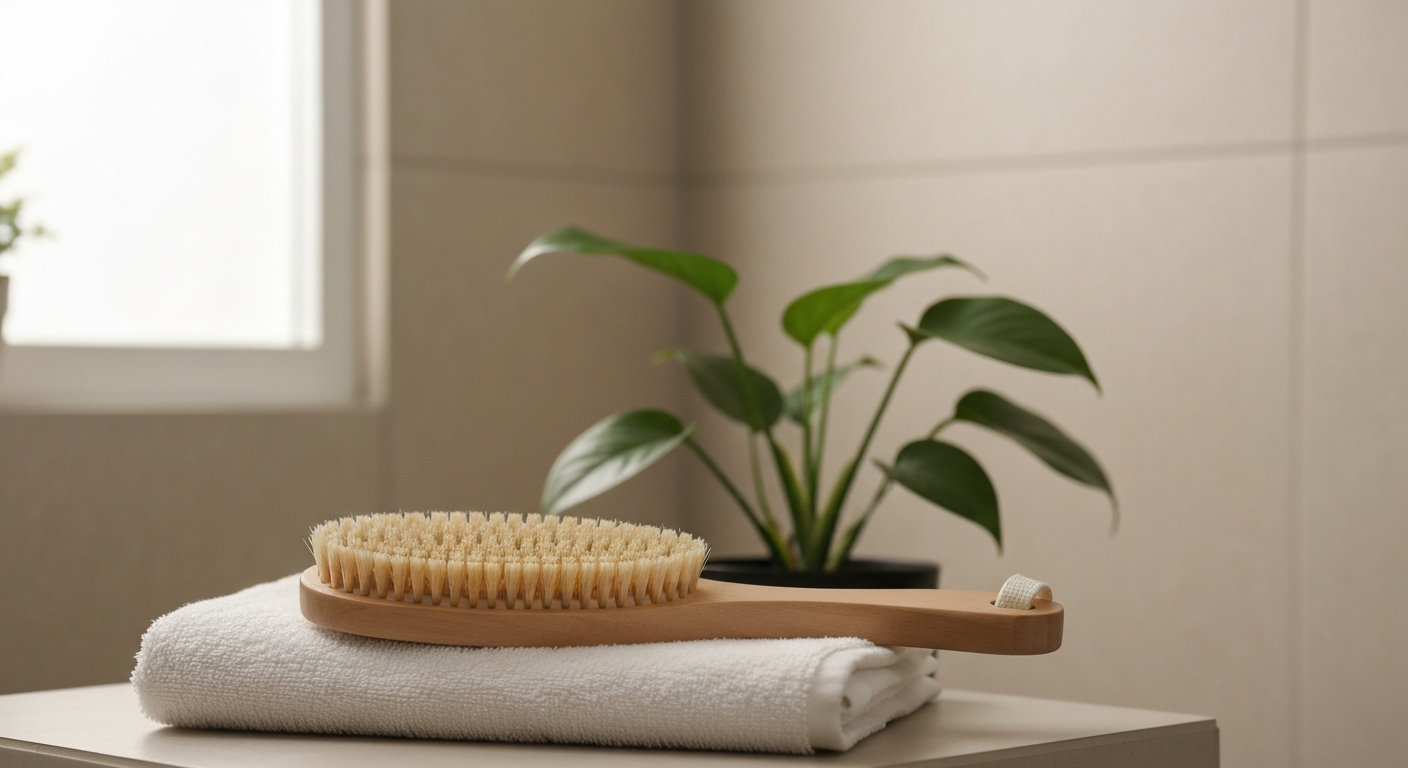
At its core, dry brushing is a simple, ancient practice involving the use of a stiff-bristled brush, typically made from natural fibers, to gently massage and exfoliate the skin while it’s dry. The brushes often feature a long handle to reach all areas of the body, and the bristles themselves are firm but not overly harsh.
The technique itself is straightforward: you brush your skin in specific patterns, usually in long, sweeping strokes directed towards your heart. This physical action serves as a form of mechanical exfoliation, similar to how a scrub or a loofah works, but performed on dry skin before showering.
While it feels like a modern trend, dry brushing has roots in various traditional health practices, including Ayurveda, where it’s known as “Garshana” and is used to stimulate circulation and promote skin health. The idea is that stimulating the skin’s surface can have broader benefits for the body, a concept that we’ll explore in detail as we dissect its claimed advantages.
The benefits that are actually real
When we strip away the grander, unproven claims, dry brushing offers several tangible benefits that contribute to healthier, more radiant skin and a sense of well-being. These are the aspects where the science, or at least common dermatological understanding, aligns with the experience.
Superior Exfoliation for Smoother Skin
This is, without a doubt, the primary and most well-supported benefit of dry brushing. Our skin is constantly shedding dead cells, a process called desquamation. Sometimes, these dead cells don’t shed as efficiently as they could, leading to a dull, rough, or flaky appearance.
Dry brushing provides an excellent form of physical exfoliation. The firm bristles gently yet effectively slough away these dead skin cells from the surface of your epidermis. Think of it as a natural, manual resurfacing treatment. Regular exfoliation helps to:
- Improve skin texture: By removing the rough, flaky layer of dead cells, dry brushing reveals the fresh, smoother skin underneath. Your skin will feel noticeably softer to the touch almost immediately after your first session.
- Enhance skin radiance: Dead skin cells can make your complexion appear dull and lackluster. By removing them, dry brushing allows your skin’s natural glow to shine through.
- Promote cell turnover: While not a deep cellular change, stimulating the skin’s surface encourages the natural process of cell renewal, leading to healthier-looking skin over time.
- Prepare skin for moisturization: With the barrier of dead skin cells removed, your skin is better able to absorb moisturizers, oils, and lotions, making them more effective.
The result is skin that not only looks better but also feels incredibly smooth and supple. This alone is a compelling reason for many to incorporate dry brushing into their routine.
A Temporary Boost in Circulation
As you sweep the brush across your skin, you’ll notice a slight redness and a feeling of warmth, sometimes even a tingling sensation. This isn’t just your imagination; dry brushing does indeed stimulate superficial blood flow to the skin’s surface.
This temporary increase in microcirculation brings a fresh supply of oxygenated blood to the skin cells. While this boost is localized and transient – meaning it doesn’t profoundly impact systemic circulation or cardiovascular health – it can contribute to that immediate invigorated feeling and a healthy, rosy glow.
Think of it like a brisk walk in cool weather: your skin feels alive and stimulated. This temporary flush is simply the capillaries near the skin’s surface responding to the physical stimulation. It’s not a deep circulatory overhaul, but it does contribute to the sensation of being refreshed and energized. For some, this invigorating effect is a pleasant way to start the day, similar to how other physical recovery tools that speed muscle healing can provide localized benefits.
The Value of a Mindful Ritual
Beyond the physical benefits, one of the most underestimated advantages of dry brushing is its role as a self-care ritual. In our fast-paced lives, taking even a few minutes each day to engage in a mindful practice can have significant psychological benefits.
- Stress reduction: The rhythmic, repetitive motion of dry brushing can be surprisingly meditative. It forces you to slow down, focus on your body, and disconnect from external stressors for a brief period.
- Enhanced body awareness: Regularly touching and paying attention to your skin can foster a deeper connection with your body. It encourages you to notice changes, appreciate your physical form, and engage in self-nurturing.
- Energizing start to the day: Many proponents find that dry brushing provides a natural energy boost, making them feel more awake and ready to tackle the day without relying on caffeine. It’s a physical wake-up call that leaves your skin feeling alive.
- Consistency and routine: Establishing a consistent self-care routine, no matter how simple, can provide a sense of stability and accomplishment. The ritual itself becomes a small act of self-love.
While these benefits are more anecdotal and psychological than strictly scientific, their impact on overall well-being is undeniable. The ritualistic aspect of dry brushing transforms it from a mere skincare step into a holistic practice that nurtures both body and mind.
The lymphatic and cellulite claims, examined
This is where we need to apply our evidence-first lens. While dry brushing offers clear benefits for skin exfoliation and serves as a pleasant ritual, many of its most ambitious claims, particularly regarding lymphatic “detoxification” and cellulite reduction, are not supported by scientific evidence.
The Lymphatic Drainage and “Detox” Myth
One of the most frequently touted benefits of dry brushing is its alleged ability to stimulate the lymphatic system, thereby “detoxifying” the body. Let’s break down why this claim is largely unsubstantiated.
Understanding the Lymphatic System: The lymphatic system is a crucial part of your immune system and circulatory system. It’s a network of vessels, nodes, and organs that carry lymph – a clear fluid containing white blood cells – throughout the body. Its primary functions include:
- Fluid balance: Draining excess fluid and waste products from tissues back into the bloodstream.
- Immune response: Filtering lymph and fighting infections.
- Fat absorption: Transporting fats from the digestive system.
Unlike the circulatory system, which has the heart as a pump, the lymphatic system relies on muscle contractions, breathing, and general body movement to circulate lymph.
Why Dry Brushing Doesn’t “Detox” the Lymphatic System:
- Superficial Pressure: The lymphatic vessels are located both superficially (just beneath the skin) and deep within the body. While dry brushing can stimulate the superficial lymphatic capillaries, the pressure applied is generally too light and non-specific to significantly impact the deeper, larger lymphatic vessels or to create a meaningful “drainage” effect that would lead to systemic detoxification.
- Body’s Natural Detoxification: Your body has incredibly efficient and complex detoxification systems: the liver and kidneys. These organs are responsible for filtering toxins, metabolizing waste products, and ensuring they are eliminated from the body. No amount of superficial skin brushing can replicate or significantly enhance the work of these vital organs.
- Lack of Specific Technique: True manual lymphatic drainage (MLD), performed by trained therapists, involves very specific, gentle, rhythmic strokes and pressure designed to follow the precise pathways of the lymphatic system and encourage fluid movement, especially in cases of lymphedema (swelling due to lymphatic system impairment). Dry brushing, as a general practice, lacks this precision and therapeutic intent.
- “Detox” as a Buzzword: The term “detox” is often used broadly in wellness marketing without a clear scientific definition. Our bodies are constantly detoxifying themselves; they don’t need external “help” from a brush to perform their fundamental functions unless there’s a medical condition requiring intervention.
While the direction of dry brushing strokes (towards the heart) is often justified by the idea of “following lymphatic flow,” this practice mainly aligns with venous return and general circulation. The idea that it’s “unclogging” or “draining” a “sluggish” lymphatic system in healthy individuals is simply not supported by physiological evidence.
The Cellulite Reduction Illusion
Another persistent claim is that dry brushing can reduce or eliminate cellulite. This is perhaps one of the most compelling and often disappointing myths associated with the practice.
Understanding Cellulite: Cellulite is a common skin condition that affects up to 90% of women (and some men) after puberty. It’s characterized by dimpled, lumpy skin, typically on the thighs, buttocks, and abdomen. Cellulite is not simply “fat”; it’s a structural issue. It occurs when fat cells beneath the skin push up against the connective tissue (collagen fibers) that anchor the skin to underlying muscle. When these fibers are tight or irregular, they pull down on the skin, while the fat cells push up, creating the characteristic dimpled appearance. Factors like genetics, hormones, diet, lifestyle, and skin elasticity all play a role.
Why Dry Brushing Doesn’t Reduce Cellulite:
- Superficial Treatment: Dry brushing works on the very surface layer of the skin (epidermis) and to a minimal extent, the uppermost dermis. Cellulite, however, is a structural issue involving fat cells and connective tissue in the deeper layers of the skin and subcutaneous tissue. A superficial brush cannot penetrate deeply enough or exert the kind of structural change needed to alter the architecture of cellulite.
- Temporary Appearance vs. Structural Change: Any perceived “reduction” in cellulite after dry brushing is likely temporary and due to other factors:
- Temporary Swelling: The temporary increase in superficial blood flow and mild inflammation can slightly plump the skin, making dimples appear less prominent for a very short period.
- Improved Skin Texture: By making the skin smoother through exfoliation, the overall appearance of the skin might seem better, but the underlying cellulite remains unchanged.
- No Impact on Fat Cells or Connective Tissue: Dry brushing does not break down fat cells, nor does it alter the fibrous bands that cause the dimpling. There is no scientific mechanism by which a stiff brush can achieve these structural changes.
While some people might feel their skin looks better overall, it’s crucial to manage expectations: dry brushing cannot “cure” or significantly reduce cellulite. It’s a cosmetic issue that no topical treatment or superficial massage has been proven to effectively eliminate.
Here’s a summary of the common claims versus reality:
| Claimed Benefit | Scientific Evidence | Reality |
|---|---|---|
| Exfoliation | Strong | Effectively removes dead skin cells, leading to smoother, softer, and more radiant skin. |
| Lymphatic Detox | None | Dry brushing is too superficial to significantly impact the lymphatic system’s function or “detox” the body. The body has its own efficient detox organs. |
| Cellulite Reduction | None | Cellulite is a structural issue involving fat and connective tissue; dry brushing does not alter this structure. Any perceived change is temporary and superficial. |
| Circulation Boost | Temporary/Superficial | Temporarily increases superficial blood flow, creating warmth, a rosy glow, and an invigorating sensation. |
| Stress Reduction/Ritual | Anecdotal/Psychological | Promotes mindfulness, self-care, body awareness, and a sense of well-being through a consistent routine. |
How to dry brush correctly
To maximize the real benefits of dry brushing and minimize any potential irritation, proper technique is key.
Choose the Right Tool
Invest in a good quality natural bristle brush. Look for one with a long handle to reach your back and lower legs easily. The bristles should be firm but not overly harsh or scratchy. Some brushes come with a detachable head for easier use on closer areas.
Timing is Everything: Dry Skin Before Your Shower
Always dry brush on dry skin, preferably in the morning before you shower or bathe. Brushing wet skin can be too abrasive and irritating. Starting your day with dry brushing can also enhance its invigorating effects.
The Technique: Strokes Towards the Heart
The general rule of thumb is to always brush towards your heart. This direction aligns with the natural flow of your venous and superficial lymphatic systems, even if the “lymphatic detox” claims are overblown, it’s still a sensible practice for general circulation.
- Start at your feet: Begin at your soles and ankles. Use long, sweeping strokes, moving upwards towards your knees.
- Move to your legs: Continue brushing up your thighs, always stroking towards your groin area.
- Hands and arms: Start at your hands, brushing up your arms towards your armpits.
- Torso: For your abdomen, use gentle, circular, clockwise motions. For your back, if you can reach, brush upwards towards your heart.
- Pressure: The pressure should be gentle to moderate. You’re not scrubbing a floor or trying to abrade your skin. The goal is to stimulate and exfoliate, not to irritate. Your skin should be slightly pink afterwards, not angry red or scratched. If it hurts, you’re pressing too hard.
- Avoid sensitive areas: Skip your face, neck, and any areas with very thin or delicate skin. Also avoid breasts or directly over moles.
Frequency
Start slowly, especially if you have sensitive skin. Begin with 2-3 times a week, and if your skin tolerates it well, you can gradually increase to 4-5 times a week, or even daily. Listen to your body and adjust as needed.
Post-Brushing Care: Shower and Moisturize
After you’ve finished dry brushing your entire body, hop into the shower. This will wash away the exfoliated dead skin cells and any impurities. Follow up with your favorite body wash.
Once out of the shower, pat your skin gently dry and immediately apply a nourishing moisturizer or body oil. Because dry brushing has removed the superficial layer of dead skin, your skin will be primed to absorb these hydrating products more effectively, locking in moisture and leaving your skin feeling incredibly soft and supple. This is where the true glow comes from!
Brush Maintenance
Keep your brush clean. Once a week, wash the bristles with gentle soap and water, rinse thoroughly, and hang it in a well-ventilated area to air dry completely. This prevents bacterial buildup and keeps the bristles hygienic.
Who should skip it
While dry brushing is generally safe for most people, it’s not for everyone. Certain skin conditions or sensitivities can be exacerbated by the practice, potentially leading to irritation, damage, or even infection.
You should definitely avoid dry brushing if you have:
- Eczema, Psoriasis, or Rosacea: These inflammatory skin conditions compromise the skin barrier. Dry brushing can trigger flare-ups, increase redness, itching, and irritation, and potentially damage already delicate skin.
- Sensitive or Reactive Skin: If your skin is easily irritated, prone to redness, or reacts poorly to exfoliation, dry brushing might be too aggressive.
- Broken Skin: Any cuts, wounds, abrasions, rashes, sunburns, or open sores are absolute contraindications. Brushing over broken skin can introduce bacteria, lead to infection, and delay healing.
- Active Acne or Breakouts (on the body): While less common on the body, if you have active body acne, dry brushing can spread bacteria and worsen breakouts.
- Varicose Veins: Avoid brushing directly over varicose veins, as it can potentially irritate them or worsen their appearance.
- Moles or Warts: Be careful to avoid brushing directly over moles or warts to prevent irritation or damage.
- Thin or Fragile Skin: As we age, our skin can become thinner and more fragile. If your skin is very delicate, dry brushing might be too harsh.
- Certain Medical Conditions: If you have any underlying medical conditions, especially those affecting your skin, circulation, or lymphatic system, it’s always best to consult with your doctor or a dermatologist before starting dry brushing. This includes conditions like diabetes or compromised immune systems.
- Pregnancy: While not an absolute contraindication, some pregnant individuals may find their skin more sensitive. It’s best to consult with your healthcare provider before incorporating new practices during pregnancy.
Always err on the side of caution. If you experience any pain, excessive redness, irritation, or discomfort, stop dry brushing immediately. Your skin’s health and comfort should always be the priority.
Frequently Asked Questions
Can dry brushing help with ingrown hairs?
Yes, dry brushing can be quite effective in preventing and reducing ingrown hairs. Ingrown hairs often occur when dead skin cells accumulate and block the hair follicle, causing the hair to grow inwards. By regularly exfoliating with dry brushing, you remove these dead skin cells, keeping the follicles clear and allowing hair to grow out normally. For best results, focus on areas prone to ingrown hairs, like legs and bikini line, but always be gentle.
How long does it take to see results from dry brushing?
You’ll likely notice an immediate difference in the smoothness and softness of your skin right after your first dry brushing session and subsequent shower. Your skin will feel invigorated and appear more radiant due to the exfoliation and temporary circulation boost. However, more significant improvements in overall skin texture and tone typically take a few weeks of consistent practice (e.g., 3-5 times a week). Keep in mind that “results” are limited to exfoliation and skin feel; claims related to lymphatic detox or cellulite reduction are not realistic, regardless of how long you dry brush.
Is it okay to dry brush every day?
For most people with healthy, non-sensitive skin, dry brushing daily is perfectly fine, provided you use gentle pressure and listen to your skin. Many proponents incorporate it into their daily morning routine. If you have sensitive skin, or are new to dry brushing, it’s best to start with 2-3 times a week to allow your skin to adjust, and then gradually increase frequency if tolerated. If you experience any irritation, redness, or discomfort, reduce the frequency or stop altogether.
What’s the difference between dry brushing and body scrubbing?
Both dry brushing and body scrubbing are forms of physical exfoliation, but they differ in application and mechanism. Dry brushing is performed on dry skin using a brush with stiff bristles, typically before a shower. It relies on the mechanical action of the bristles to slough off dead skin cells. Body scrubbing, on the other hand, involves applying a granular product (like sugar or salt scrubs) to wet skin during a shower or bath. The granules provide the exfoliation, often combined with hydrating oils. While both achieve smoother skin, dry brushing offers a unique invigorating and ritualistic experience on dry skin, while body scrubs often provide additional moisturizing benefits with their oil bases. They can complement each other, but it’s often best not to do both on the same day to avoid over-exfoliation. To support overall skin health, remember that healthy skin also benefits from internal factors, a topic explored further in our article on the gut-skin connection.
Verdict
Dry brushing is a simple, affordable, and enjoyable practice that offers genuine benefits for your skin and overall well-being. As an effective physical exfoliant, it can significantly improve skin texture, leaving it smoother, softer, and more radiant. The temporary boost in superficial circulation provides an invigorating sensation, and perhaps most importantly, dry brushing serves as a wonderful self-care ritual that encourages mindfulness and body awareness.
However, it’s crucial to approach dry brushing with realistic expectations. While its value as an exfoliation and self-care tool is clear, the claims regarding lymphatic “detoxification” and cellulite reduction are not supported by scientific evidence. Our bodies are incredibly adept at detoxifying themselves through our liver and kidneys, and cellulite is a complex structural issue that superficial brushing cannot resolve.
At Rooted Glow, we encourage you to embrace practices that are both enjoyable and genuinely beneficial. Dry brushing, when understood for its true capabilities, can be a valuable addition to your wellness routine. By focusing on its proven benefits and avoiding unsupported hype, you can cultivate healthier, glowing skin and a deeper connection to your body, all while honoring an evidence-first approach to natural health.