Best Running Shoes for Beginners
How beginners choose a cushioned running shoe from published weight, stack, drop, and price at ASICS and Nike. No wear test and no injury claim.

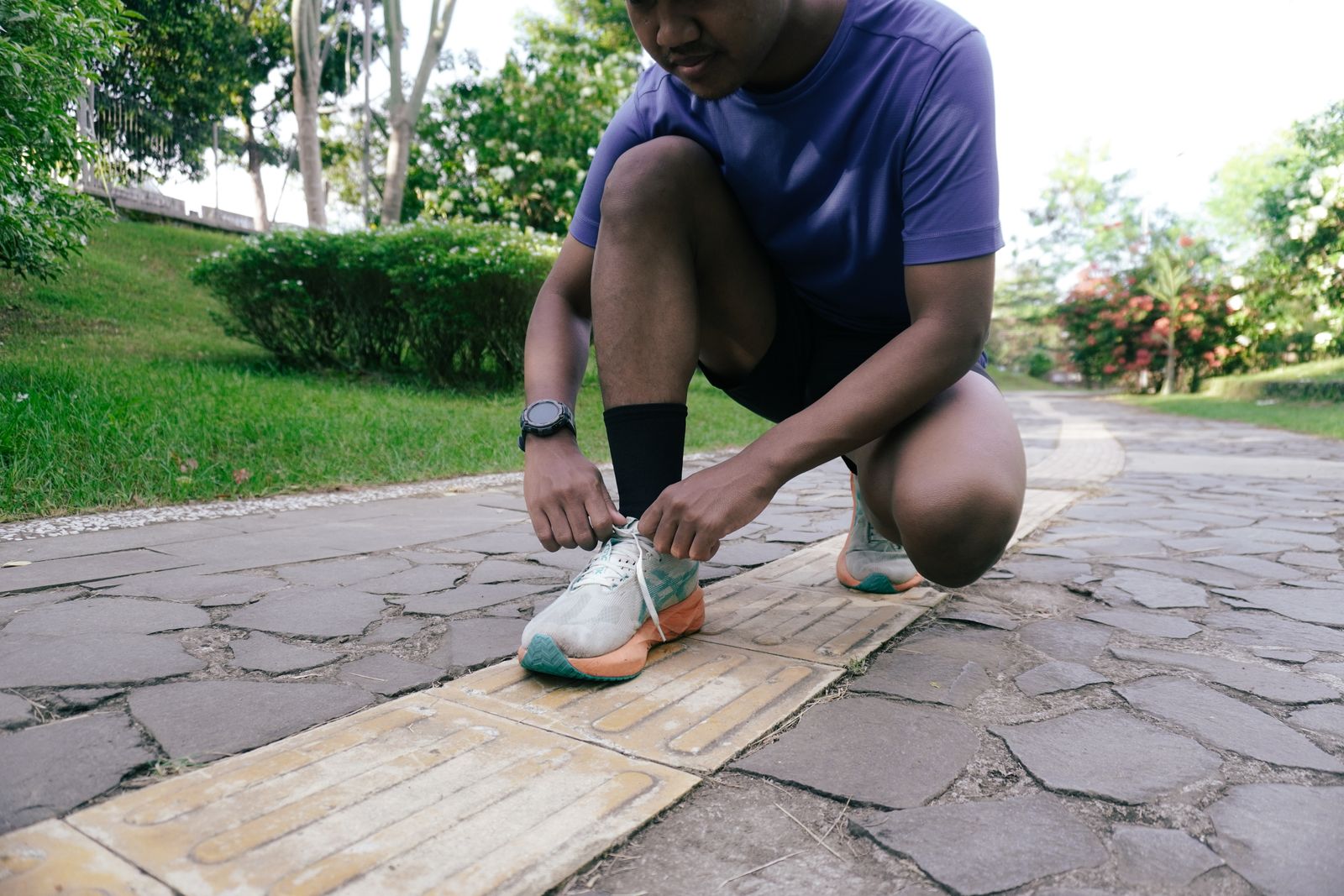
Photo: Mnz / Pexels. Contextual stock photograph, not a product test or endorsement. License.
A first running shoe is a fit decision. Cushion, drop, and weight are the numbers brands publish. This page uses those numbers, checked on 9 November 2026. Rooted Glow has not worn, run in, or mileage-tested any shoe here. Nothing on the brand pages shows that a shoe prevents injury.
If you are still deciding whether to run, the beginner’s running guide covers the start. Shoe level after that is split on the intermediate and advanced pages. This page stays with beginners, and with cushioned trainers a beginner is likely to see.
How beginners can choose
Fit. Leave about a thumb’s width in front of the longest toe. The midfoot should feel secure, and the heel should not slide. Try shoes later in the day, in the socks you run in, and walk or jog in them before you buy. A sore spot in the store is a fit problem. Return rules vary by shop.
Cushion. Cushion is the foam between the foot and the ground. Brands mark some shoes “high” cushion. A taller stack is more foam, not a softer foam by itself. The table below uses the stack figure only when the brand prints one.
Drop. Drop is the heel height minus the forefoot height, in millimeters. The shoes below are listed at 8 mm or 10 mm. A brand’s drop is that brand’s measurement. It is not a prescription for how your foot should land.
Neutral or stability. Every shoe in the table is listed by its brand as neutral. This page does not sort runners by gait. A shop fitter or a clinician is the person to ask if someone has already been told to use a stability shoe.
One pair first. Most new runners need one daily shoe. A second pair matters when easy days and faster days stop sharing a job. The rotation guide is about that later step.
Best cushioned running shoes
These four are cushioned trainers with a published weight, drop, and price. They are not a tested ranking. Sample sizes differ, so a lighter listed weight is not automatically a lighter shoe on your foot.
| Shoe | Weight | Drop | Stack | US price | Foam, as the brand names it |
|---|---|---|---|---|---|
| ASICS Novablast 5 | 255 g (9 oz) on the men’s US page. The NZ comparison also lists 225 g for women | 8 mm | Not printed on the US page | $150 | FF BLAST MAX |
| ASICS Novablast 6 | 253 g (8.9 oz) on the men’s US page. The NZ comparison lists 215 g for women | 8 mm | Not printed on the US page or the NZ comparison | $155 | FF BLAST MAX, plus an FF TURBO SQUARED pod in the forefoot |
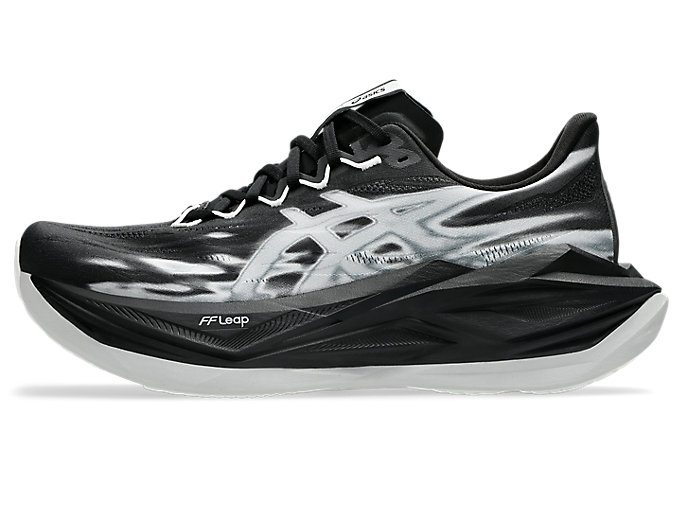
| ASICS Superblast 3 | 239 g (8.4 oz) on the US page. The page does not name the sample size | 8 mm | 46.5 mm heel / 38.5 mm forefoot, in the 13 February 2026 launch release | $210 on the US page. The launch release said $200 from 1 March 2026 | FF LEAP and FF BLAST PLUS |
| Nike Vomero Plus | About 292 g (10.3 oz), men’s US 10, on Nike.com | 10 mm | 45 mm heel in Nike’s 23 June 2025 newsroom note. Forefoot stack is not printed there | $180 | Full-length ZoomX |
Sources are listed at the end. The advanced shoe page also discusses the Superblast 3. If a figure there differs, use the ASICS pages linked below. This table does not use lab re-measurements.
Novablast 5. ASICS’s men’s US page lists high cushion, an 8 mm drop, 255 g (9 oz), neutral support, FF BLAST MAX foam, and a $150 price. The New Zealand comparison calls it a lightweight daily trainer and lists 255 g for men and 225 g for women. ASICS describes it as covering easy running through moderate tempo. That is the brand’s positioning. The spec guide is the Novablast 5 page.
Novablast 6. The men’s US page lists high cushion, an 8 mm drop, 253 g (8.9 oz), neutral support, and $155. The foam line is FF BLAST MAX with an FF TURBO SQUARED trampoline pod in the forefoot, and ASICSGRIP rubber in the forefoot. The NZ comparison lists 253 g for men and 215 g for women, an engineered woven upper, and an outsole of ASICSGRIP plus AHAR LO. The Novablast 6 review covers the shoe in full, and the Evo SL vs Novablast 6 page holds the 5 vs 6 spec table and the comparison with the lighter adidas shoe.
Superblast 3. The US page lists high cushion, an 8 mm drop, 239 g (8.4 oz), neutral support, FF LEAP foam, and $210. The 13 February 2026 launch release lists a total stack of 46.5 mm at the heel and 38.5 mm in the forefoot, a dual layer of FF LEAP and FF BLAST PLUS, and a launch price of $200 from 1 March 2026. The US page checked for this update showed $210. ASICS positions it as a highly cushioned trainer, including for faster sessions. It is more shoe, and more money, than a first pair needs to be.
Vomero Plus. Nike.com lists about 292 g (10.3 oz) in a men’s US 10, a 10 mm heel-to-toe drop, full-length ZoomX, and $180. Nike’s 23 June 2025 newsroom release lists a 45 mm heel stack and describes the shoe as max cushion for everyday running and longer runs. That release does not print a forefoot stack. A 10 mm drop under a 45 mm heel would put the forefoot near 35 mm only if Nike measures drop that way. This page does not treat 35 mm as a Nike-printed number. The Vomero Plus spec guide collects the same sources.
The adidas Adizero Evo SL is the lighter shoe in the Evo SL vs Novablast 6 comparison. It is not in this cushioned table.
When a second shoe comes up
A second pair is optional. The rotation guide is the page for giving two pairs different jobs, such as a cushioned shoe on easy days and a lighter shoe on faster days. Beginners who run a few times a week can stay with one fitting pair until the mileage makes that split useful.
Best running shoes for beginner women
The shoes above are not a separate women’s ranking. ASICS does publish a women’s sample weight on the New Zealand comparison: 225 g for the Novablast 5 and 215 g for the Novablast 6, against 255 g and 253 g in the men’s samples. Those are different sample sizes, not a different foam. The Nike weight above is a men’s US 10. A women’s Vomero Plus weight is not copied here, because this check used the men’s Nike.com page.
Fit is the part that changes. Use the thumb’s-width check, a women’s last if the brand sells one, and the socks you run in. A men’s or unisex sample weight does not tell you whether the heel will hold.
Best running shoes for beginner men
The men’s listed weights in the table are the ones to compare: Novablast 5 at 255 g, Novablast 6 at 253 g, and Vomero Plus at about 292 g in a men’s US 10. The Superblast 3 page lists 239 g without stating the sample size, so this page does not line it up against those men’s samples as if the sizes matched. Drop and price are in the table. The same fit checks apply.
Pace and easy days
Cushioned shoes are the usual pick for easy running. What “easy” means in minutes per mile is a pace question, not a shoe question. The running pace calculator can take a recent race time and estimate training paces. The zone 2 heart rate calculator shows three common heart-rate formulas. It is a calculator, not medical advice. Neither tool chooses a shoe.
Frequently asked questions
What are the best running shoes for beginners?
A neutral cushioned trainer that fits, in a price you will actually use. The published options above are the Novablast 5 at $150, the Novablast 6 at $155, the Superblast 3 at $210, and the Vomero Plus at $180. This is not a wear test, and it is not a ranking of which shoe feels better.
What are the best cushioned running shoes?
On published cushion, the Vomero Plus is Nike’s max-cushion trainer, with a 45 mm heel stack. The Superblast 3 is the tall ASICS trainer, at 46.5 mm in the heel in the launch release. The Novablast 5 and 6 are ASICS’s high-cushion daily trainers. ASICS does not print their stack height on the US pages checked here. “Best” still depends on fit.
What are the best running shoes for beginner women?
There is no separate list. Use the same shoes, and use ASICS’s women’s sample weights where the brand prints them: 225 g for the Novablast 5 and 215 g for the Novablast 6. Fit the shoe on your foot. A listed men’s weight is not a women’s fit.
Do beginners need a stability shoe?
Not from this page. The four shoes are listed as neutral. If a clinician or a fitter has already recommended a stability shoe, that advice outranks a general table.
Has Rooted Glow tested these shoes?
No. The figures are from ASICS and Nike pages and press notes checked on 9 November 2026. There is no mileage, no “miles run,” and no injury result to report.
Sources
- ASICS US, Novablast 5: https://www.asics.com/us/en-us/novablast—5/p/ANA_1011B974-500.html
- ASICS US, Novablast 6: https://www.asics.com/us/en-us/novablast-6/p/ANA_1011C243-250.html
- ASICS New Zealand, Novablast 6 vs Novablast 5, 19 July 2026: https://www.asics.com/nz/en-nz/blog/article/novablast-6-vs-novablast-5-whats-changed-in-the-latest-update
- ASICS US, Superblast 3: https://www.asics.com/us/en-us/superblast-3/p/ANA_1013A177-001.html
- ASICS, Superblast 3 launch release, 13 February 2026: https://corp.asics.com/en/press/article/unleash-more-energy-to-move-body-and-mind-%E2%80%93-asics-launches-the-next-generation-superblasttm-3-with-new-ff-leaptm-foam-technology
- Nike.com, Vomero Plus men’s: https://www.nike.com/t/vomero-plus-mens-road-running-shoes-5npsVBwT
- Nike newsroom, 23 June 2025: https://about.nike.com/en/newsroom/releases/nike-vomero-plus-vomero-premium-official-images