The Gut-Skin Connection Explained
How your digestive health directly affects your skin, the science behind the gut-skin axis, and what to eat for a clearer complexion.
 The Rooted Glow Team
 One of our team members spent years fighting persistent acne. She tried prescription creams, salicylic acid cleansers, benzoyl peroxide, AHAs, retinoids. Every topical solution dermatologists recommended. Her bathroom looked like a pharmacy.
Nothing worked long term. The breakouts would calm down for a few weeks, then come roaring back.
Then she changed her diet. Within six weeks, her skin was clearer than it had been since high school. No new products. No new topicals. Just different food.
That experience sent us down a research rabbit hole that changed how we think about skin entirely. The connection between your gut and your skin isn’t fringe science or wellness hype. It’s a well-documented physiological relationship that mainstream dermatology is only beginning to take seriously.
The Gut-Skin Axis
Your gut and your skin are connected through several pathways that researchers collectively call the “gut-skin axis.” This isn’t a metaphor. It’s a measurable, biological communication system involving your immune system, your hormones, and your nervous system.
Here’s the simplified version: your gut contains roughly 70% of your immune cells. When something goes wrong in your gut (dysbiosis, increased intestinal permeability, chronic inflammation), your immune system sends inflammatory signals throughout your body. Your skin, as your largest organ and a key part of your immune defense, responds to those signals.
Dr. Whitney Bowe, a dermatologist and researcher at Mount Sinai, has published extensively on the gut-skin connection. Her work shows that patients with acne, rosacea, and eczema frequently have altered gut microbiome compositions compared to people with clear skin.
This isn’t a coincidence. It’s a pattern that shows up in study after study.
The Microbiome Connection
Your gut microbiome, the trillions of bacteria living in your digestive tract, does far more than digest food. These organisms:
- Produce short-chain fatty acids (SCFAs) like butyrate, which strengthen your intestinal lining and reduce systemic inflammation
- Synthesize vitamins including B vitamins and vitamin K
- Regulate immune responses by training your immune cells to distinguish between threats and normal tissue
- Produce neurotransmitters including about 95% of your body’s serotonin
- Metabolize hormones that influence sebum production and skin cell turnover
When your microbiome is diverse and balanced, these processes run smoothly. When it’s disrupted (by antibiotics, poor diet, chronic stress, or excessive sugar), the downstream effects can show up on your skin within days.
Leaky Gut and Skin Inflammation
“Leaky gut” has become a buzzword, but the underlying concept (increased intestinal permeability) is legitimate science. Your intestinal lining is designed to be selectively permeable, allowing nutrients through while blocking toxins and undigested food particles.
When the tight junctions between intestinal cells become compromised, particles that shouldn’t enter the bloodstream get through. Your immune system recognizes these as foreign invaders and launches an inflammatory response.
That inflammation doesn’t stay in your gut. It circulates. And it frequently manifests in the skin as:
- Acne flare-ups
- Eczema patches
- Rosacea redness
- Psoriasis outbreaks
- Premature aging (inflammation accelerates collagen breakdown)
A 2018 study published in the journal Frontiers in Microbiology found that patients with acne vulgaris had significantly lower gut microbiome diversity compared to controls. The researchers specifically noted depletion of Lactobacillus and Bifidobacterium species, both of which are associated with anti-inflammatory activity.
Common Gut Disruptors
Understanding what damages gut health helps explain why so many people struggle with skin issues:
Ultra-Processed Foods
Emulsifiers, artificial sweeteners, and preservatives found in processed foods have been shown to alter gut microbiome composition and increase intestinal permeability. A study from Georgia State University found that common food emulsifiers (polysorbate 80 and carboxymethylcellulose) caused gut inflammation in animal models, even at concentrations below those found in many packaged foods.
Excess Sugar
High sugar intake feeds opportunistic bacteria and yeast (particularly Candida) while starving beneficial bacteria. This creates a dysbiotic environment that promotes inflammation. The link between sugar consumption and acne has been documented repeatedly, and gut disruption is a major mechanism.
Chronic Stress
Your gut has its own nervous system (the enteric nervous system), and it’s directly connected to your brain via the vagus nerve. Chronic stress reduces blood flow to the gut, alters motility, and shifts microbiome composition. This is why breakouts often follow stressful periods.
Antibiotics
Necessary sometimes, but devastating to gut ecology. A single course of broad-spectrum antibiotics can reduce microbiome diversity by 25 to 50%, and full recovery can take months to years. It’s no coincidence that many people develop skin issues after antibiotic use.
Seed Oils and Inflammatory Fats
Excess omega-6 fatty acids (abundant in seed oils) promote inflammatory pathways. When gut permeability is already compromised, this inflammation amplifies throughout the body, including to the skin.
Foods That Support the Gut-Skin Connection
The good news: you can meaningfully improve your gut health (and by extension, your skin) through food choices. Here’s what the research supports:
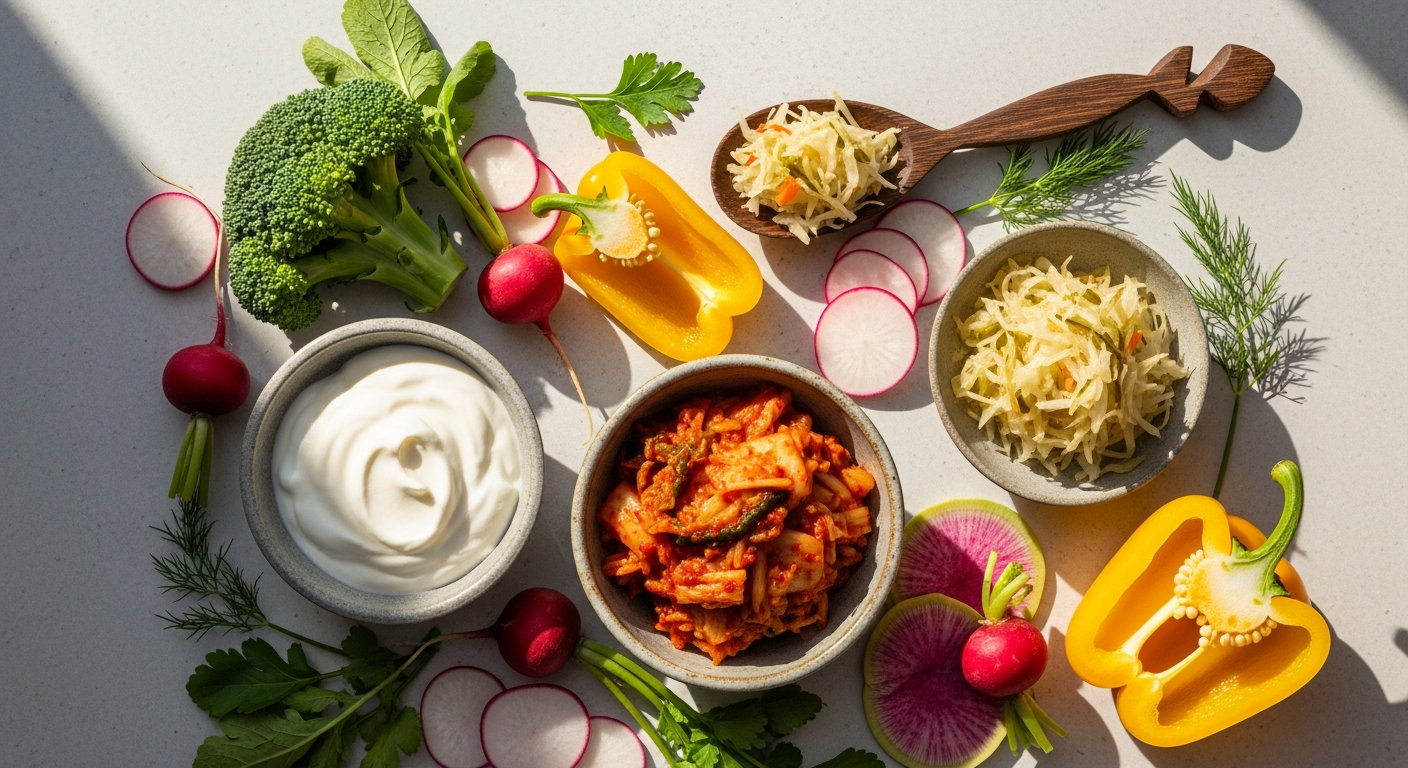
Fermented Foods
This is the single most impactful dietary change for gut health, according to a landmark 2021 Stanford study led by Justin and Erica Sonnenburg. Participants who ate 6+ servings of fermented foods daily for 10 weeks showed increased microbiome diversity and decreased markers of inflammation.
Our favorites:
- Sauerkraut. raw, unpasteurized, from the refrigerated section. The shelf-stable kind has been heat-treated and contains no live cultures.
- Kimchi. spicy, funky, and loaded with Lactobacillus strains.
- Full-fat yogurt or kefir. look for brands that list specific bacterial strains.
- Kombucha. we drink this moderately. It’s tasty, but some brands are essentially soda with a probiotic label.
Bone Broth
Rich in collagen, glycine, and glutamine, all of which support intestinal lining integrity. We simmer chicken or beef bones for 12 to 24 hours with apple cider vinegar (which helps extract minerals). A mug of bone broth daily became a ritual for us, and it’s particularly soothing when skin is acting up.
Prebiotic-Rich Foods
Probiotics get the attention, but prebiotics (the fiber that feeds beneficial bacteria) are equally important:
- Garlic
- Onions
- Leeks
- Asparagus
- Jerusalem artichokes
- Green bananas (slightly unripe)
- Chicory root
Omega-3 Rich Foods
Wild-caught fatty fish (salmon, sardines, mackerel), pastured eggs, and grass-fed meat provide omega-3 fatty acids that counterbalance inflammatory omega-6 and support healthy cell membranes throughout the body, including skin cells.
Polyphenol-Rich Foods
Berries, dark chocolate (85%+), green tea, and extra-virgin olive oil contain polyphenols that feed beneficial gut bacteria and have direct antioxidant effects on skin.
What We Removed
Adding good foods matters. But removing problematic ones matters just as much:
- Refined sugar. we cut our intake by roughly 80%. Fruit and raw honey stayed.
- Seed oils. switched to butter, ghee, olive oil, and tallow.
- Most processed foods. if the ingredient list was longer than a paragraph, it went.
- Excessive alcohol. alcohol is one of the most potent gut disruptors. We didn’t quit entirely, but we cut back significantly.
The Timeline
Gut healing isn’t instant. Here’s roughly what we experienced:
Week 1 to 2. Some digestive adjustment, especially with increased fermented food intake. A few of us experienced temporary bloating as our gut bacteria shifted. Skin didn’t change yet.
Week 3 to 4. Digestion noticeably improved. Less bloating after meals. One team member noticed her skin was less oily.
Week 5 to 8. This is where the skin changes became visible. Fewer breakouts, less redness, a more even tone. The team member who had struggled with acne for years was the most dramatic case, but everyone noticed some improvement.
Month 3 onward. Skin felt genuinely different. Smoother, more resilient, less reactive to environmental stressors. The kind of “glow” that people usually attribute to a new skincare product, but was actually coming from the inside.
Practical Steps to Start
- Add one fermented food daily. A forkful of sauerkraut with lunch or dinner is the easiest starting point.
- Cut the biggest sugar source. For most people, that’s sweetened drinks (soda, sweetened coffee, juice).
- Cook with whole ingredients. Meals don’t need to be complicated. Meat, vegetables, and good fat cooked simply is enough.
- Eat prebiotic foods regularly. Garlic and onions in your cooking counts.
- Give it 6 to 8 weeks. Gut remodeling takes time. Don’t expect results in a week.
The Bigger Picture
The gut-skin connection is one piece of a larger truth: skin health is systemic. What you eat, how you sleep, how you manage stress, and what you put on your skin all interact. No single product or supplement will fix skin that’s being sabotaged by a damaged gut.
If you’ve been fighting skin issues with topicals alone and nothing seems to stick, consider looking inward. Literally. Your gut might be the missing piece.
For more on how we approach nutrition, see our complete guide to ancestral eating. And if you’re curious about how sleep and stress fit into the picture, that’s a whole other conversation worth having.
Keep Reading
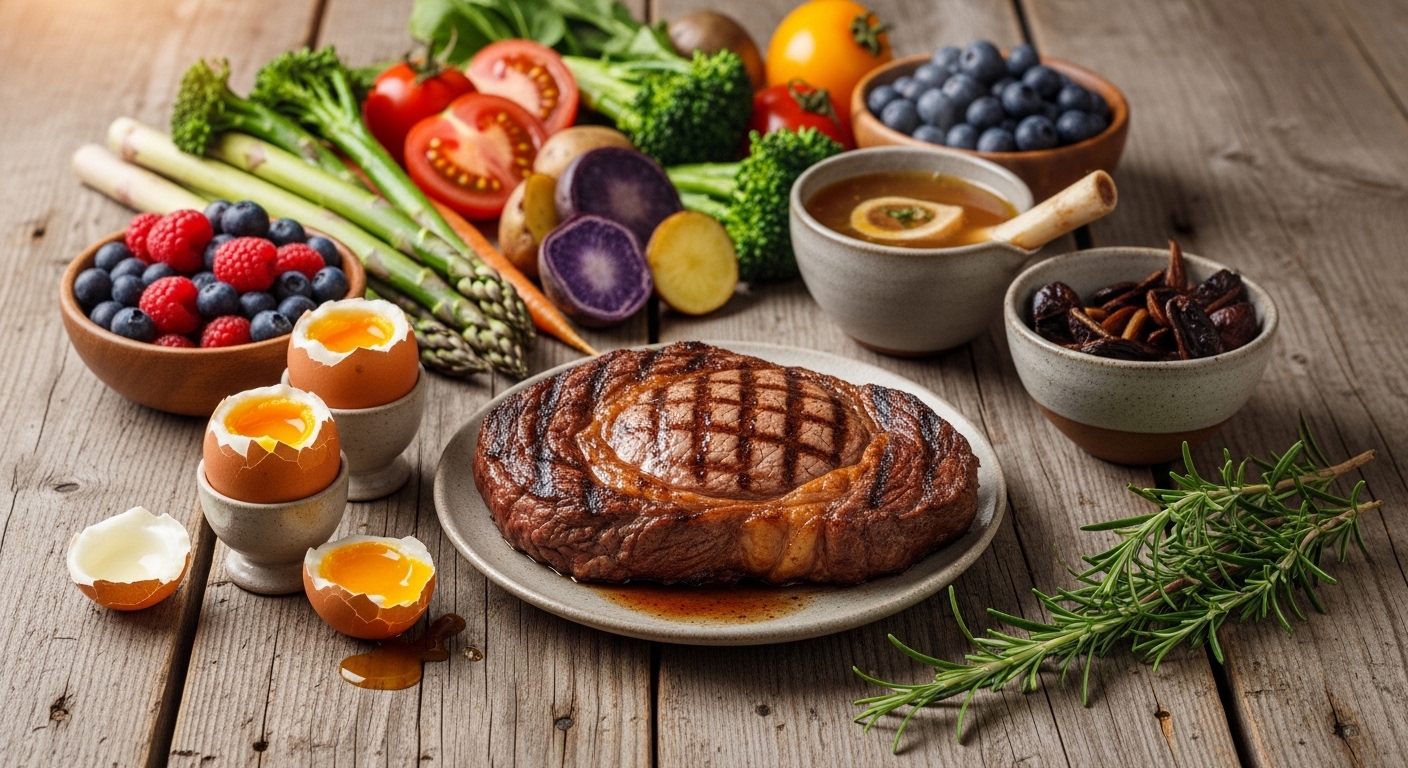
Complete Guide to Ancestral Eating
How eating like our great-grandparents. real meat, wild fish, seasonal fruit, and zero seed oils. changed the way we think about food.
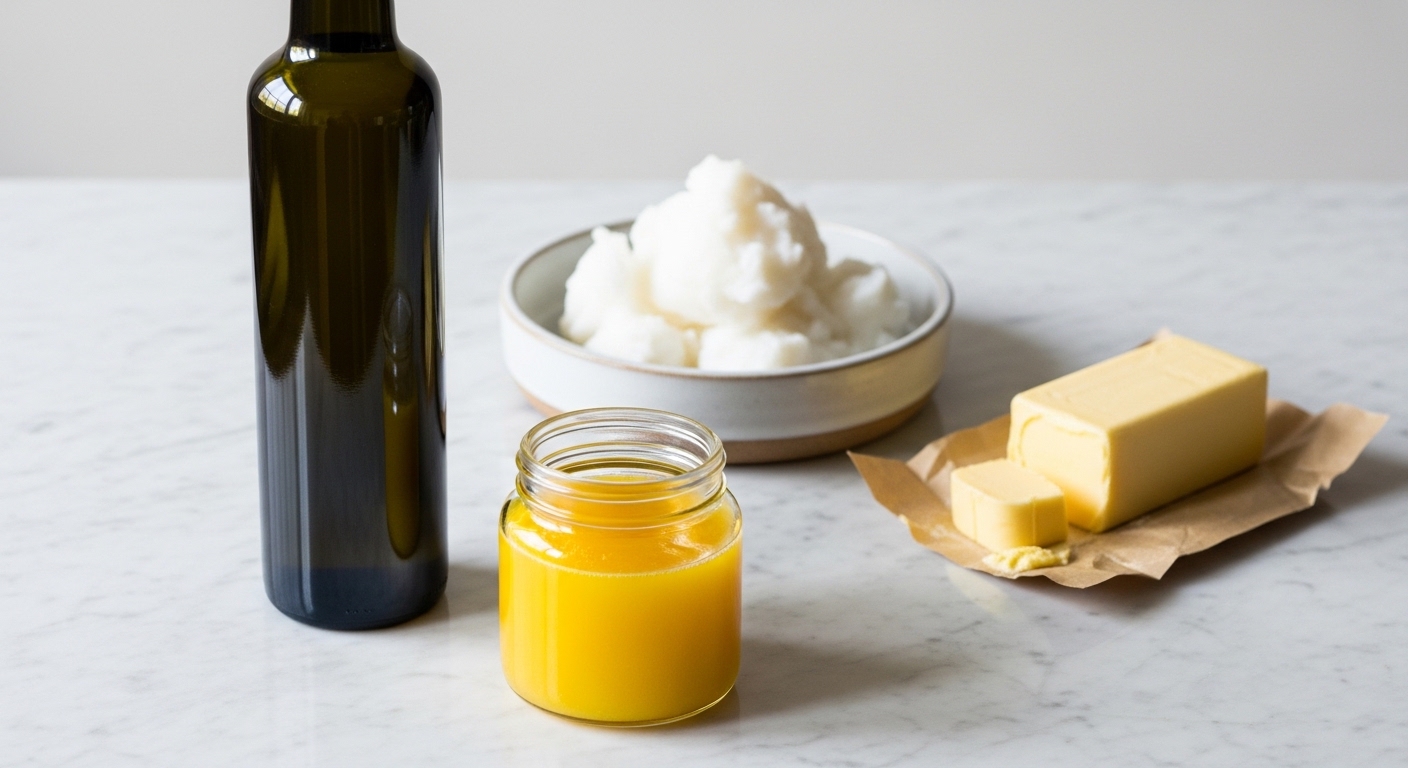
Why We Quit Seed Oils (And What We Cook With Instead)
The science behind industrial seed oils, why we removed them from our kitchen, and the traditional fats that replaced them.

15 High-Protein Breakfasts Without Grains
15 quick, high-protein breakfast ideas that keep you full until lunch without grains. No cereal, no toast, no oats. Just real, whole-food fuel.
Stay Rooted
Weekly reads on whole-food nutrition, movement, and the K-Beauty routines we actually use. No spam, no fluff. just things worth reading.