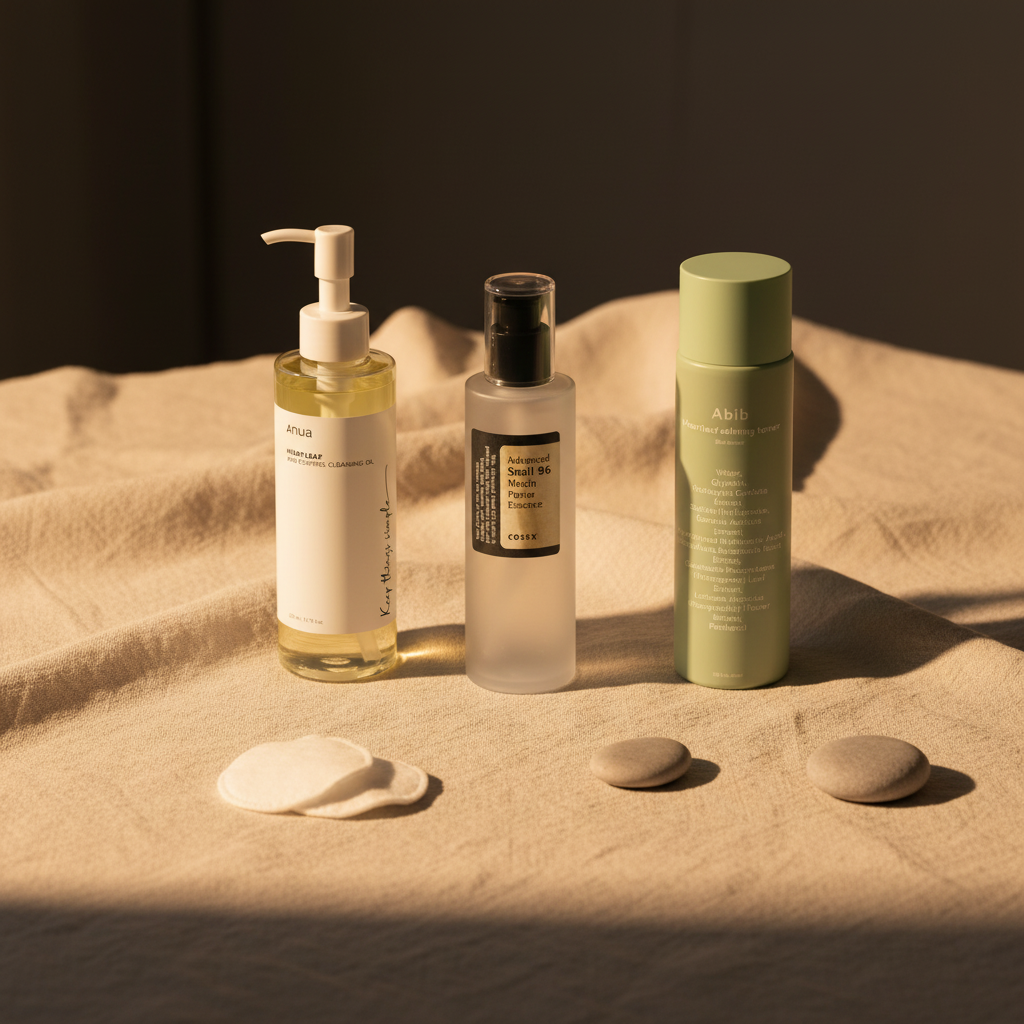
K-Beauty Night Routine for Glowing Skin
A complete Korean skincare evening routine that actually works. the steps, the products, and the philosophy behind the glass skin glow.
 The Rooted Glow Team
 The first time we saw someone with truly great Korean skincare, the kind of skin that looks lit from within, we assumed it was genetics. Good bone structure. Lucky complexion. The kind of thing you’re born with.
Then we learned about the routine. And after committing to it for three months, we understood: that glow isn’t luck. It’s layers. Literal layers of hydration, treatment, and protection applied in a specific order, consistently, every single night.
Korean skincare (K-beauty) isn’t about buying expensive products or following a rigid 12-step protocol. It’s a philosophy: treat your skin gently, hydrate it deeply, and be patient. The results compound over weeks and months, not days.
This guide covers the evening routine that transformed our skin. We’ll walk through every step, explain why it matters, and share what we’ve learned after two years of practice.
The Philosophy Behind K-Beauty
Before the steps, it helps to understand what makes Korean skincare different from Western approaches:
Hydration over stripping. Western skincare often focuses on removing oil and “drying out” blemishes. Korean skincare assumes your skin needs more moisture, not less. Even oily skin is often dehydrated skin overproducing oil to compensate.
Prevention over correction. The Korean approach prioritizes protecting and maintaining skin health before problems start. Sunscreen, antioxidants, and barrier support are considered basics, not extras.
Gentle, consistent layers. Rather than one heavy cream, K-beauty uses multiple light layers that absorb fully. This delivers hydration to different depths of the skin and avoids the heavy, pore-clogging feel of thick Western moisturizers.
Patience. Korean skincare culture accepts that real results take 28 days (one skin cell turnover cycle) at minimum. There’s less emphasis on miracle overnight transformations and more emphasis on building healthy skin over time.
The Evening Routine: Step by Step
Here’s the full routine. It looks long, but once you have the rhythm down, it takes about 10 to 15 minutes. Some nights we do every step. Some nights we do the essentials (cleansing, toner, moisturizer). Flexibility is part of the philosophy.
Step 1: Oil Cleanser
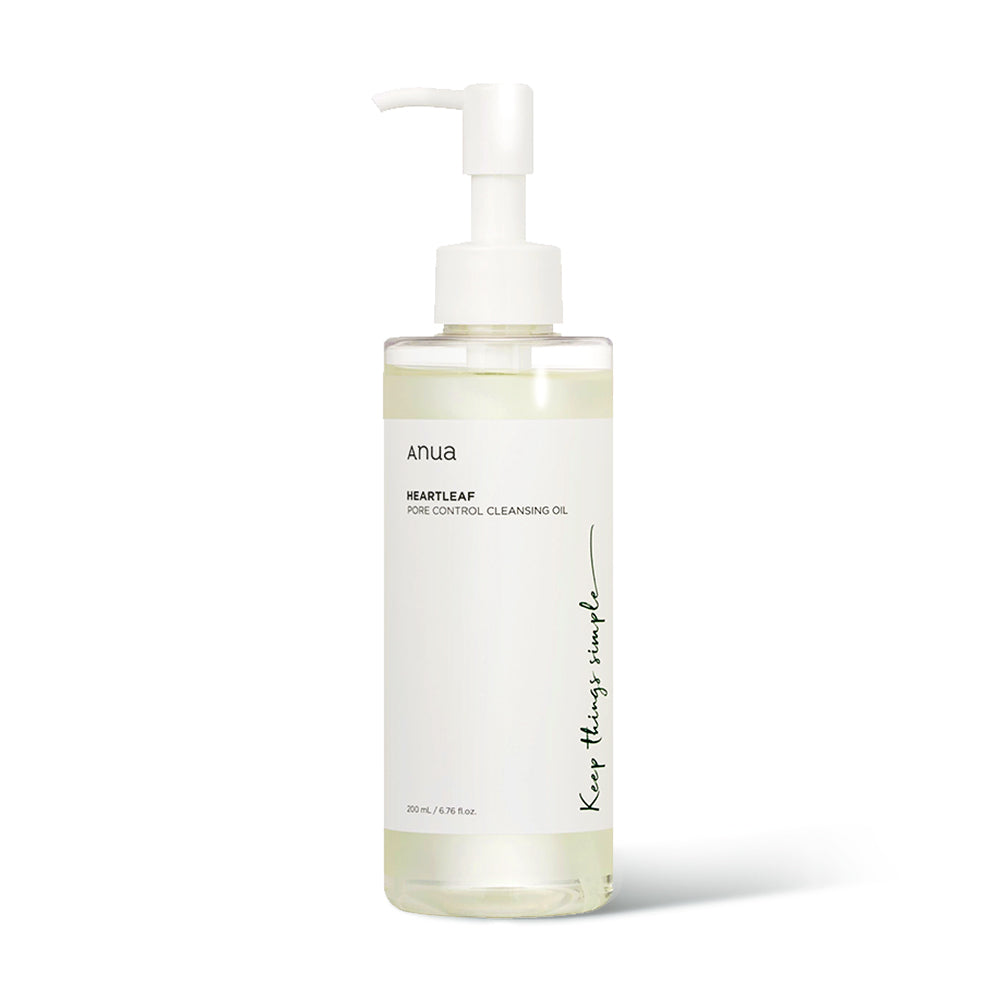
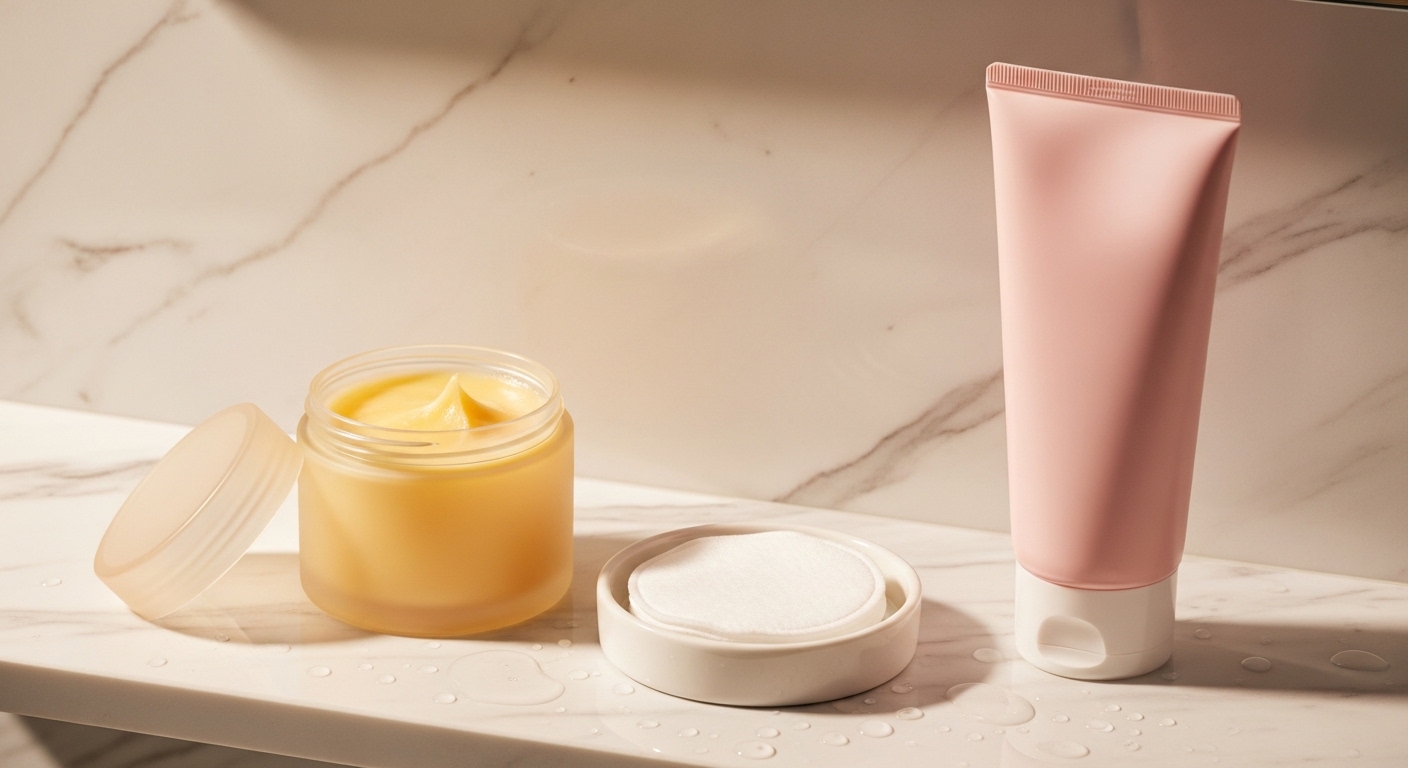
This is where the evening routine begins. An oil-based cleanser (balm or liquid) applied to dry skin dissolves makeup, sunscreen, and the day’s sebum and environmental grime.
Massage for 60 seconds. This matters. The massage breaks down sunscreen (which is designed to resist removal) and improves circulation.
Add water to emulsify, then rinse.
For a deep dive into this step, read our guide on double cleansing.
Step 2: Water-Based Cleanser
Follow the oil cleanse with a gentle, low-pH foam or gel cleanser. This removes any water-soluble residue the oil cleanser didn’t catch.
The key word is gentle. Your skin should feel clean, not tight or stripped. If it feels squeaky, your cleanser is too harsh.
Step 3: Exfoliant (2 to 3 times per week)
Not every night. Over-exfoliating is one of the most common skincare mistakes we see.
Chemical exfoliants (AHA, BHA, PHA) are preferred over physical scrubs. They dissolve dead skin cells without the micro-tears that scrubbing can cause.
- AHA (glycolic, lactic acid). for dull skin, uneven texture, fine lines. Works on the skin surface.
- BHA (salicylic acid). for oily, acne-prone skin. Oil-soluble, so it penetrates into pores.
- PHA (gluconolactone, lactobionic acid). for sensitive skin. Larger molecules, gentler effect.
Start with 1 to 2 times per week and increase based on how your skin responds. More is not better here.
Step 4: Toner
Korean toners are nothing like the astringent, alcohol-based toners Western skincare made famous in the 1990s. K-beauty toners are hydrating liquids that prepare your skin to absorb everything that follows.
Think of it as priming a sponge. Slightly damp skin absorbs serums and essences more effectively than bone-dry skin.
Pat the toner into your skin with your palms. Don’t use a cotton pad (it wastes product and can cause unnecessary friction).
Some people do the “7 skin method,” layering toner up to 7 times for intense hydration. We usually do 2 to 3 layers on dry winter nights, 1 layer in summer.
Step 5: Essence
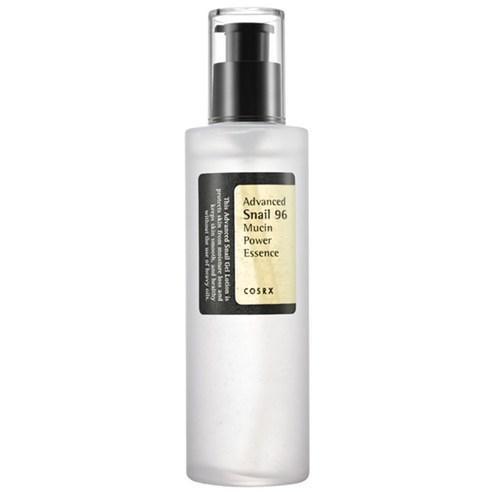
Essences are a uniquely Korean step that confuses most newcomers. Think of them as a concentrated, watery treatment that bridges the gap between toner and serum.
The most famous essence in K-beauty history is probably SK-II Facial Treatment Essence, built around fermented yeast (Pitera). But there are excellent options at every price point.
Essences typically contain fermented ingredients, hyaluronic acid, or botanical extracts. They deliver a boost of hydration and active ingredients in a lightweight format.
Pat into skin. Let absorb for 30 seconds before moving on.
Step 6: Serum or Ampoule
This is the treatment step. Serums are concentrated formulas targeting specific concerns:
- Niacinamide. for pore size, oil control, and brightness
- Vitamin C. for hyperpigmentation and antioxidant protection (some people prefer this in the AM)
- Retinol. for anti-aging, texture, and cell turnover (start slow, always use sunscreen the next day)
- Snail mucin. for hydration, healing, and soothing. Yes, it sounds strange. It works remarkably well. We have a full guide on snail mucin if you’re curious.
- Centella asiatica. for calming redness and irritation
Apply a few drops and press gently into the skin. Don’t layer too many actives at once, especially when starting out. Pick one or two concerns and address those.
One serum that has become a team favorite for the evening step is the Anua PDRN Hyaluronic Acid Capsule 100 Serum. The combination of PDRN and hyaluronic acid gives a noticeable plumping effect overnight that we noticed after the first week.
For our favorite serums, check out 10 Korean Serums Worth the Hype.
Step 7: Sheet Mask (1 to 2 times per week)
Sheet masks are cotton or hydrogel sheets soaked in concentrated essence. They force your skin to sit in a bath of active ingredients for 15 to 20 minutes.
They’re not strictly necessary, but they’re effective, relaxing, and have become a ritual we genuinely look forward to.
Apply after serum. Leave on for 15 to 20 minutes (not longer; the mask can start re-absorbing moisture from your skin if it dries out). Pat remaining essence into your skin after removing.
Step 8: Eye Cream
The skin around your eyes is thinner and more delicate than the rest of your face. It needs a dedicated product.
Use your ring finger (it applies the least pressure) to gently pat eye cream around the orbital bone. Don’t rub or pull the skin.
Step 9: Moisturizer
The sealing step. Moisturizer locks in all the hydration and actives you’ve layered underneath.
K-beauty moisturizers tend to be lighter than Western ones. Gel-cream textures are popular for oily skin. Richer creams work for dry and mature skin.
Apply a generous amount and press it in. Your face should feel comfortable, not greasy and not tight. If you want a moisturizer with real nourishing depth, the Abib Jericho Rose Crème Nutrition Tube delivers rich hydration that seals everything in beautifully without feeling heavy.
Step 10: Sleeping Mask (2 to 3 times per week)
Sleeping masks (or sleeping packs) are the final optional layer. They create an occlusive barrier that prevents moisture loss overnight.
Apply as the last step, over your moisturizer. Wake up, rinse off, and marvel at how soft your skin feels.
These are particularly effective in winter when indoor heating dries out your skin overnight.
The Essentials vs. The Full Routine
Not every night needs all 10 steps. Here’s our recommendation:
Every night (non-negotiable). Double cleanse, toner, moisturizer. This takes about 5 minutes.
Most nights. Add serum/ampoule. Takes 7 to 8 minutes total.
2 to 3 times per week. Add exfoliant, sheet mask, or sleeping mask as needed.
Consistency with the basics matters more than doing every step occasionally.
Common Mistakes
Too many actives at once. Starting retinol, vitamin C, and AHA exfoliant in the same week is a recipe for irritated, peeling skin. Introduce one new active at a time, with at least 2 weeks between introductions.
Skipping sunscreen the next morning. Many evening actives (retinol, AHAs) make your skin photosensitive. An incredible evening routine means nothing if you skip sun protection the following day.
Expecting instant results. Skin cell turnover takes about 28 days. Give any new routine at least 4 to 6 weeks before judging.
Ignoring your skin’s signals. If your face is red, stinging, or peeling, you’re doing too much. Scale back. The Korean philosophy is gentleness first.
What Changed for Us
After 3 months of consistent K-beauty evening routines:
- Skin was noticeably more hydrated and plump
- Texture improved (fewer rough patches and bumps)
- Breakouts became less frequent and healed faster
- The “glow” became a thing people actually commented on
- We became more attuned to what our skin needed on any given day
The biggest shift was mental. We stopped seeing skincare as a chore and started treating it as a nightly ritual. Ten minutes of gentle self-care before bed became something we looked forward to.
Further Reading
This guide is the hub for our K-beauty content. Explore these topics in depth:
Keep Reading
My Complete AM Wellness Routine
The exact morning routine our team follows. from waking up to walking out the door. skincare, movement, nutrition, and the small habits that set the tone.
Double Cleansing: Why and How
The Korean skincare technique that changed how we wash our faces. what it is, why it works, and how to do it without overcomplicating things.

Why Korean Sunscreen Is Different
What makes Korean sunscreens better than most Western options. The formulation differences, the texture revolution, and why it matters.
Stay Rooted
Weekly reads on whole-food nutrition, movement, and the K-Beauty routines we actually use. No spam, no fluff. just things worth reading.